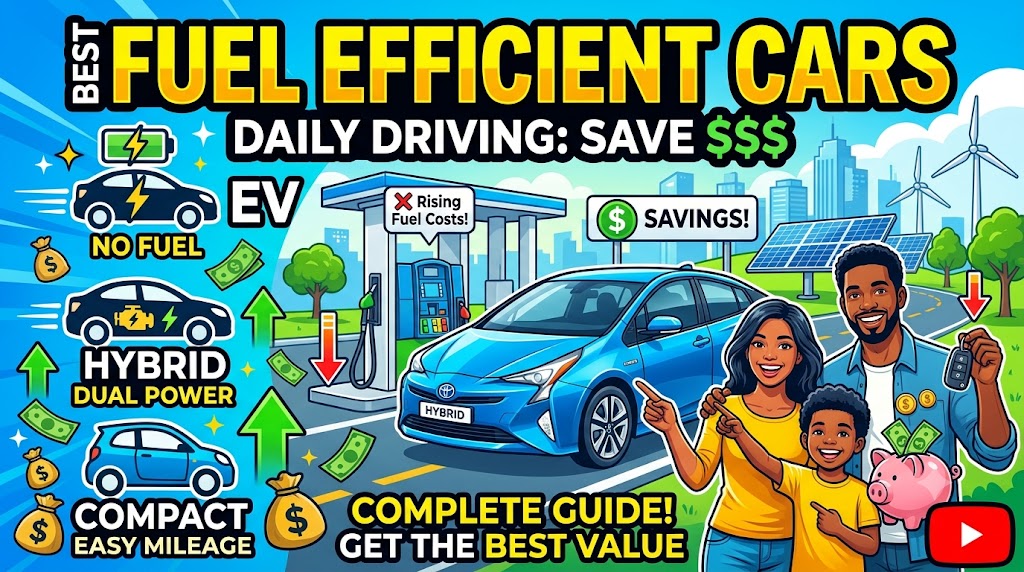
With rising fuel costs and increasing awareness about vehicle efficiency, many drivers are searching for the best fuel efficient cars for daily driving. A fuel-efficient vehicle helps reduce monthly expenses, lowers environmental impact, and provides better value for everyday commuting.
Whether you drive to work, travel frequently, or need a reliable family vehicle, choosing a car with excellent fuel economy can make a significant difference in long-term ownership costs.
This guide explains the important factors to consider when selecting a fuel-efficient car and highlights the features that make a vehicle ideal for daily use.
Why Choose a Fuel Efficient Car?
Fuel-efficient cars provide several advantages for everyday drivers.
Lower Fuel Expenses
The biggest benefit of a fuel-efficient vehicle is reduced fuel consumption. Drivers who travel long distances can save significant money over time.
Reduced Environmental Impact
Cars with better fuel efficiency generally produce fewer emissions compared to vehicles with higher fuel consumption.
Better Resale Value
As fuel prices change, efficient vehicles often remain in demand because many buyers prefer lower operating costs.
Improved Daily Convenience
Fuel-efficient cars require fewer trips to the fuel station, making daily commuting easier.
Types of Fuel Efficient Cars
1. Hybrid Cars
Hybrid vehicles combine a traditional engine with an electric motor.
Benefits include:
- Excellent fuel economy
- Lower emissions
- Regenerative braking technology
- Efficient city driving performance
Hybrid cars are especially useful for drivers who spend a lot of time in traffic.
2. Electric Vehicles (EVs)
Electric cars use battery-powered motors instead of gasoline engines.
Advantages:
- No fuel expenses
- Lower maintenance requirements
- Quiet driving experience
- Advanced technology features
However, charging availability should be considered before purchasing an EV.
3. Compact Fuel Efficient Cars
Small cars often provide excellent mileage because they are:
- Lightweight
- Easy to drive
- Less expensive to maintain
They are ideal for daily commuting and city driving.
Important Features of Fuel Efficient Cars
1. High Mileage Performance
The most important factor is how efficiently a vehicle uses fuel.
Look for:
- Strong fuel economy ratings
- Efficient engine technology
- Smart transmission systems
2. Engine Efficiency
Modern engines use advanced technology to improve performance while reducing fuel consumption.
Examples include:
- Turbocharged engines
- Direct fuel injection
- Automatic start-stop systems
3. Lightweight Design
A lighter vehicle requires less energy to move, improving fuel efficiency.
Manufacturers use advanced materials and aerodynamic designs to reduce weight.
4. Aerodynamic Shape
Vehicle design affects fuel consumption, especially at higher speeds.
Better aerodynamics help reduce air resistance and improve efficiency.
How to Choose the Best Fuel Efficient Car for Daily Driving
Consider Your Driving Habits
Your daily routine affects which vehicle is best.
For example:
- City drivers may prefer hybrids or compact cars
- Highway drivers may prefer efficient sedans
- Long-distance drivers may consider EVs with longer range
Check Maintenance Costs
Fuel savings are important, but maintenance expenses also affect ownership costs.
Consider:
- Repair costs
- Service availability
- Spare parts prices
- Reliability ratings
Compare Total Ownership Costs
Do not look only at the purchase price.
Calculate:
- Fuel expenses
- Insurance costs
- Maintenance
- Depreciation
- Financing costs
A slightly more expensive efficient car may save more money over time.
Tips to Improve Fuel Efficiency
Even efficient vehicles can consume more fuel if driven poorly.
Follow these tips:
Maintain Proper Tire Pressure
Underinflated tires increase fuel consumption.
Drive Smoothly
Avoid sudden acceleration and heavy braking.
Reduce Extra Weight
Removing unnecessary items from your vehicle can improve efficiency.
Maintain Regular Service
Regular maintenance helps engines operate efficiently.
Avoid Excessive Idling
Long periods of idling waste fuel.
Benefits of Fuel Efficient Vehicles for Families
Fuel-efficient cars are practical family choices because they offer:
- Lower monthly expenses
- Reliable transportation
- Easier maintenance planning
- Better long-term value
Many modern efficient vehicles also include advanced safety and comfort features.
Fuel Efficient Cars vs Traditional Vehicles
Fuel Efficient Cars
Advantages:
- Lower fuel costs
- Reduced emissions
- Better daily economy
- Modern technology
Disadvantages:
- Some models have higher purchase prices
- EV charging infrastructure may vary
Traditional Gasoline Vehicles
Advantages:
- Wide availability
- Easy refueling
- Large selection
Disadvantages:
- Higher fuel expenses
- More emissions
- Greater dependence on fuel prices
Future of Fuel Efficient Vehicles
The automotive industry is moving toward cleaner and more efficient transportation.
Future developments include:
- Advanced hybrid technology
- Longer-range electric vehicles
- Improved battery systems
- AI-powered efficiency management
- Lightweight vehicle designs
As technology improves, fuel-efficient cars are expected to become more affordable and accessible.